Crystal Cash Cows: How Hollywood's Mystical Money Machine Turned Sage Bundles Into Stock Options
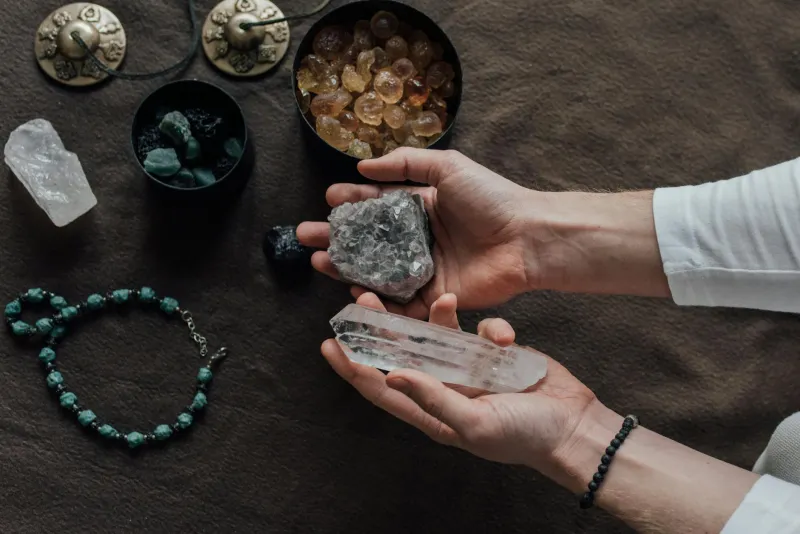
The Great Spiritual Stock Market
Remember when celebrities just sold perfume and maybe a clothing line at Target? Those were simpler times, back when the most mystical thing about Hollywood was how they made Adam Sandler movies profitable. Fast-forward to 2024, and suddenly every A-lister has become a spiritual guru with a subscription box and a meditation app that costs more than your Netflix addiction.
We're living in the golden age of celebrity mysticism, where sage smudging has somehow become as lucrative as blockbuster franchises. And honestly? The math is absolutely wild.
From Red Carpets to Crystal Carpets
It started innocently enough. A few celebrities mentioned their morning meditation routines in interviews. Maybe they posted an Instagram story with some crystals artfully arranged next to their green juice. But somewhere between "self-care Sunday" and "manifesting abundance," Hollywood figured out that spirituality sells better than scandal.
Take the explosion of celebrity wellness brands. We've got everyone from former pop stars to reality TV queens launching "transformational" products that promise to align your chakras and your bank account simultaneously. The irony? These products often cost more than most people's rent, which seems like the opposite of spiritual enlightenment, but what do we know?
The real genius move was packaging ancient practices as premium lifestyle experiences. Suddenly, burning sage isn't just burning sage — it's "space clearing with ethically sourced white sage bundles, hand-picked during the full moon." And that'll be $47.99, plus shipping.
The Goop Effect Goes Global
While Gwyneth Paltrow pioneered the art of selling wellness to wealthy women with too much time and money, the model has exploded across Hollywood like a particularly expensive virus. Every celebrity now has their own version of spiritual capitalism, from $200 meditation courses to $500 "energy healing" sessions conducted over Zoom.
The business model is brilliant in its simplicity: take something that's been free for thousands of years, add celebrity endorsement, create artificial scarcity, and watch the money roll in. It's like printing money, except the printer runs on good vibes and rose quartz.
Consider the retreat industry. What used to be simple spiritual getaways have become luxury experiences that rival five-star resorts. We're talking $5,000 weekends where you pay premium prices to eat raw vegetables and listen to someone with a famous last name talk about "authentic living" while sitting on a $2,000 meditation cushion.
The Algorithm of Enlightenment
Social media has turned spiritual practice into performance art. Every morning routine becomes content. Every crystal purchase becomes a teaching moment. Every moment of "gratitude" becomes a brand opportunity.
The influencer-industrial complex has created an entire ecosystem where spiritual authenticity is measured in engagement rates. Your meditation practice isn't valid unless it's hashtagged, filtered, and monetized. It's like the universe is telling us to manifest financial abundance, and celebrities are just really good listeners.
The subscription model has been particularly devastating to traditional spirituality. Why read a free ancient text when you can pay $29.99 monthly for "personalized spiritual guidance" from someone who played a witch in a Netflix series? The democratization of wisdom has somehow become the monetization of everything.
When Manifestation Meets Marketing
The language of manifestation has become the perfect sales pitch. "You deserve abundance" translates to "buy our overpriced products." "Trust the universe" means "trust our payment processing system." "Raise your vibration" apparently requires purchasing specific crystals that somehow vibrate at exactly the frequency of your credit card.
Celebrity spiritual teachers have mastered the art of making you feel spiritually inadequate while simultaneously offering the solution for purchase. It's like emotional manipulation wrapped in healing energy, tied with a bow made of sustainably sourced hemp.
The retreat circuit has become particularly absurd. These aren't just wellness weekends anymore — they're full-blown spiritual theme parks where enlightenment comes with a gift bag and a non-disclosure agreement.
The Billion-Dollar Buddha
Here's the thing that nobody wants to admit: it's working. The celebrity wellness industry is worth billions, and it's growing faster than anyone's spiritual practice. People are genuinely finding value in these experiences, even if they're paying premium prices for what their grandmothers got for free.
Maybe that's the real magic trick. In a world where everything feels chaotic and uncertain, celebrities are selling certainty — even if it comes with a monthly subscription fee. They're offering community, purpose, and meaning in beautifully packaged, Instagram-ready formats.
The question isn't whether these celebrities are authentic spiritual practitioners. The question is whether authenticity matters when the product genuinely helps people, even if it costs more than their car payment.
The Universe's Profit Margins
At the end of the day, we're witnessing the complete commodification of inner peace. Ancient wisdom traditions that were meant to free us from material attachment have become the ultimate material attachments. It's either the most ironic development in human history or the most brilliant business model ever devised.
Either way, the celebrities are laughing all the way to their crystal-infused bank vaults, and honestly? Good for them. They figured out how to make money by telling people they deserve good things. In this economy, that's basically a public service.
The real magic isn't in the crystals or the sage or the $300 meditation cushions. The real magic is convincing millions of people that enlightenment comes with a price tag — and somehow making them grateful for the opportunity to pay it.