Hate Pays Better: The Calculated Chaos of TikTok's Most Loathed Creators
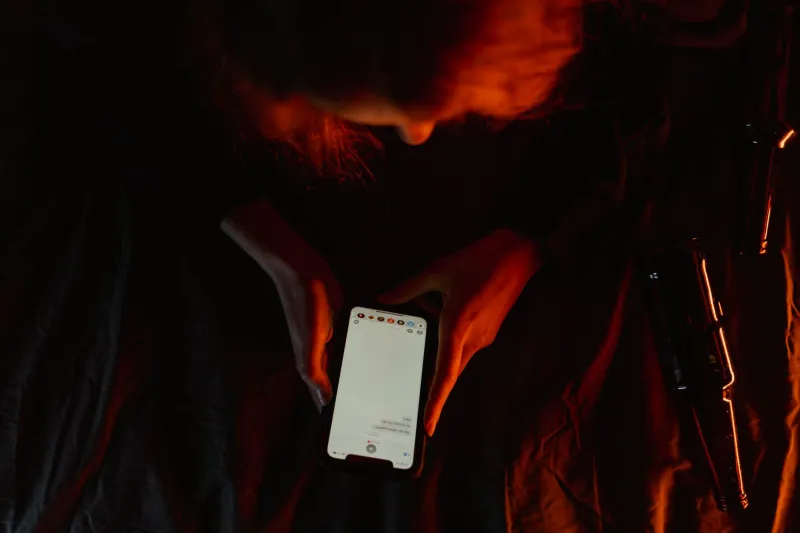
Picture the most annoying video you've seen on TikTok this week. The one that made you actually say something out loud to an empty room. The one you sent to a friend specifically so they could be annoyed too. The one you watched three times in a row while getting progressively more furious before liking it by accident and then spending four minutes trying to unlike it.
Congratulations. You just made that creator money. A lot of it.
The Algorithm Doesn't Care Why You're Watching
Here's the foundational truth of the rage-farming economy, the one that makes it both genius and deeply uncomfortable: TikTok's recommendation engine cannot distinguish between a view driven by love and a view driven by the desire to watch a car crash in real time. Engagement is engagement. Watch time is watch time. Comments — even the ones that are essentially digital screaming — count exactly the same as praise.
This is not a bug. It's not even a flaw, exactly. It's just a mathematical reality that a very specific type of content creator figured out before most brands, advertisers, or platform regulators did. And those creators have spent the last two years building empires on the back of your irritation.
The strategy has a name in creator circles: rage farming. And it is, depending on your perspective, either the most cynical content model in the history of media or the most honest one.
Meet the Architects of Your Anger
Rage farming isn't accidental. The creators who do it well — the ones pulling in seven-figure brand deals and hundreds of millions of views — are running sophisticated operations with the same strategic intentionality as any traditional media company. They just measure success in comment section meltdowns instead of Nielsen ratings.
The playbook has a few reliable chapters. First: identify a topic where a significant portion of the audience has a strong existing opinion. Parenting styles. Dietary choices. Generational identity. Regional pride. Then: take the most extreme, most provocative position possible on that topic, present it with complete confidence and zero apparent self-awareness, and let the internet do the rest.
The key variable — the thing that separates the professionals from the amateurs — is calibration. Go too far and you cross from provocative into genuinely offensive, which triggers advertiser flight and platform suppression. Don't go far enough and you're just mildly annoying, which doesn't trend. The sweet spot is a very specific kind of infuriating: wrong enough to inspire furious response, defensible enough that brands can maintain plausible distance.
"The best rage farmers are actually really disciplined," a talent manager who reps several high-engagement creators told PopWire Today. "They know exactly where the line is. They walk right up to it, they do a little dance on the edge, and they never fall over. That's a skill. A weird, slightly alarming skill, but a skill."
The Brand Relationship Nobody Wants to Explain
Here's where the story gets genuinely interesting, and where several PR departments are going to have mildly panicked Monday mornings after this publishes.
Brands have known about the engagement math for years. Hate engagement drives reach. Reach drives impressions. Impressions drive the metrics that justify ad spend. The logical conclusion — the one that several major consumer brands have quietly reached — is that sponsoring a rage-farming creator is an extraordinarily efficient media buy, as long as you can maintain the fiction that you had no idea the creator was controversial.
The architecture for this exists and it isn't subtle once you know to look for it. Brands don't sponsor the inflammatory content directly. They sponsor the creator's adjacent, comparatively benign content — the cooking video, the "day in my life" segment, the product unboxing — while their logo sits in a bio link that gets visited by millions of people who arrived via the outrage content. The comment section burns. The brand's website traffic spikes. Nobody technically did anything wrong, and everyone goes home with more money than they started with.
When PopWire Today reached out to three brands whose products appeared in sponsorship segments adjacent to viral rage-farming content, two did not respond and one sent a statement describing the creator as "a dynamic voice in the lifestyle space" with a straight face that we can only assume was very convincing in person.
The Creator's Honest Take
The genuinely fascinating wrinkle in all of this is that some rage farmers are remarkably candid about what they're doing — just not in the content itself. In interviews, podcasts, and the occasional unguarded moment on a secondary account, several prominent provocateurs have essentially described their work as performance art with a monetization strategy.
"People think I actually believe everything I say," one creator told a podcast host last year, before apparently thinking better of it and asking for that section to be cut. It wasn't. "I'm playing a character. The character is annoying. People hate the character. The character pays my mortgage."
This raises an obvious question about authenticity that the rage-farming economy resolves with elegant simplicity: authenticity is irrelevant. The emotional response is real even if the persona isn't. And the emotional response is the product.
The Long Game and Its Limits
Rage farming isn't without risk, and the creators who've built careers on it are increasingly aware of its structural fragility. Audiences habituate. The thing that made you furious in January becomes the thing you scroll past in July. Escalation is the only available lever, and escalation has diminishing returns and increasing platform risk.
Several early rage-farming pioneers have already cycled through the model's natural lifespan: explosive growth, peak virality, gradual desensitization, a desperate pivot to something more extreme, a ban or demonetization, and then the long, quiet slide toward a Substack and a podcast called something like "Unfiltered."
But for every creator who burns out, three new ones are watching the analytics and learning the formula. The rage pipeline is not drying up. If anything, it's getting more sophisticated, more targeted, and more lucrative — because the one thing the algorithm will never stop rewarding is the thing that makes you feel something, even if that something is the specific, electric fury of watching someone be confidently wrong on the internet.
You already know what to do with that feeling. So does their bank account.