The Bot That Streamed a Billion Times: Inside the Shadow Economy Rigging Your Favorite Charts
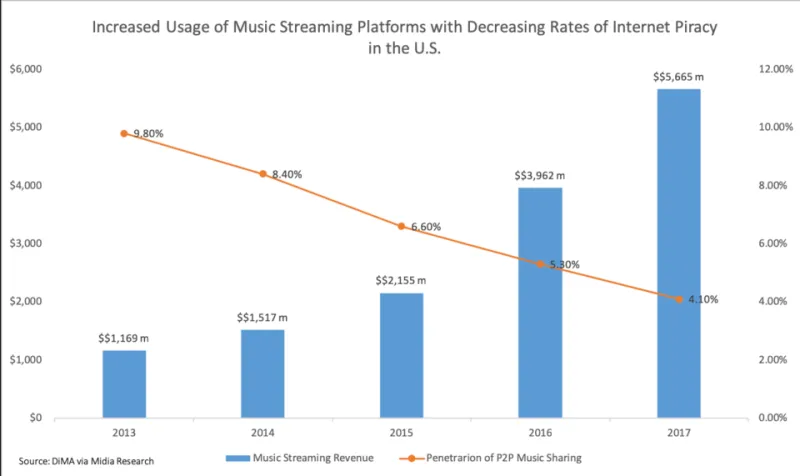
Photo: Blendersuh19, CC BY-SA 4.0, via Wikimedia Commons
Picture this: a song drops at midnight on a Friday. By Saturday morning, it's already trending. By Sunday, it's sitting inside the top ten of Spotify's Global chart. The artist posts a teary-eyed thank you to their fans. The fans go absolutely feral with pride. Everyone feels great.
Now picture a warehouse — or more accurately, a server room, or a basement, or a very nondescript apartment in any city on earth — where hundreds of devices are logged into hundreds of streaming accounts, playing that same song on a loop, all weekend, with no human ears anywhere in the vicinity.
Both things can be true simultaneously. In 2025, they frequently are.
Welcome to the Stream Farm
The term "stream farm" sounds almost quaint, like something you'd find at a very weird county fair. The reality is considerably less charming. Stream farms are operations — ranging from bedroom side hustles to sophisticated, professionally run services — that generate artificial plays on streaming platforms using bots, device farms, and coordinated listening networks.
The economics are straightforward and, frankly, kind of insane. Spotify pays rights holders somewhere between $0.003 and $0.005 per stream. That sounds microscopic until you run the math on a million fake streams, which a reasonably well-resourced operation can generate in under a week. Suddenly you're talking about thousands of dollars, chart movement, and — most valuably — algorithmic attention that money genuinely cannot buy through legitimate means.
Because here's the thing about streaming algorithms: they're essentially popularity machines. A song that's already being streamed heavily gets recommended more. Getting recommended more generates real streams. Real streams generate more recommendations. The fake streams, if executed correctly, are just the match that lights a fire the algorithm then fans on its own.
The Label Angle Nobody Wants to Talk About
Independent artists gaming the system for survival is one conversation. Major labels doing it is a considerably more awkward one, and yet industry insiders are increasingly willing to describe a landscape where the line between "promotional streaming campaign" and "coordinated chart manipulation" is, at minimum, blurry.
What labels officially do is called a "streaming campaign" — paying third-party marketing firms to promote songs to real playlists curated by real people. What sometimes actually happens within those campaigns is a question that streaming platforms, labels, and the marketing firms themselves have every incentive to leave unanswered.
"There are firms that offer 'guaranteed placement' packages," one independent music marketing consultant told PopWire, choosing their words with the careful energy of someone who still wants to work in this industry next year. "You don't always ask how the guarantee is made. That's sort of the understood arrangement."
Spotify, Apple Music, and Tidal have all publicly committed to fighting fake streams. Spotify in particular has removed hundreds of millions of fraudulent plays and has banned artists caught manipulating numbers. But enforcement is reactive, not preventive, and the operations running these farms adapt faster than the platforms can build new detection tools.
The Playlist Industrial Complex
You can't talk about stream manipulation without talking about playlists, because playlists are the entire game.
Getting placed on a major Spotify editorial playlist — "Today's Top Hits," "Hot Country," "Rap Caviar" — is worth more to an artist's career trajectory than almost any other single event. A feature on one of those playlists can add millions of legitimate streams and translate directly into concert ticket sales, brand deals, and media coverage.
So what happens when you can't get the editorial playlist placement? You buy your way onto smaller, influential playlists instead. The practice — called "payola" in its radio-era form, and now operating under the considerably more corporate-sounding term "playlist plugging" — involves paying playlist curators, sometimes directly and sometimes through intermediary services, to add your track to their following.
Some of these curators are legitimate tastemakers with real, engaged audiences. Others are running playlists that exist entirely to be gamed — thousands of followers who are either bots or inactive accounts, designed purely to generate streams and funnel songs toward algorithmic visibility.
The curators of the latter type are doing very well financially, for what it's worth.
The Coordinated Listening Campaign: Fraud's More Photogenic Cousin
Not every manipulation tactic involves bots, and that's what makes the whole landscape so difficult to police. Enter the coordinated listening campaign — a practice that lives in a genuinely gray area and is executed openly, often by fan communities who believe, with complete sincerity, that they're just supporting their favorite artist.
The mechanics are simple: a fan account posts a "streaming party" event. Fans are instructed to stream a specific song during a specific window — often the first 24 hours after release, when charts are most sensitive to volume. They're told to use private listening mode, to let the song play in full rather than skipping, and to stream from multiple devices if possible.
Is this fraud? Technically, these are real people making genuine choices to stream a song. Is it organic popularity? Also no. It's a mobilized army of humans functioning as a slightly more legally defensible version of a bot farm. The platforms don't quite know what to do with it, and the labels — who benefit enormously from the chart positions these campaigns generate — certainly aren't rushing to condemn the practice.
What the Charts Actually Mean Now
If you've made it this far and you're feeling a creeping suspicion that the charts don't mean what you thought they meant, that suspicion is well-founded and you should let it live in your brain rent-free.
Chart positions in the streaming era are less a reflection of what people love and more a reflection of what has been most aggressively promoted, gamed, and algorithmically amplified. That's not true of every song in every position — plenty of genuine, organic hits exist and always will. But the infrastructure surrounding every major release now includes, to varying degrees, people whose entire job is to ensure the numbers look right before anyone can tell whether the song is actually good.
The music is sometimes incredible. The machinery behind the music is sometimes a server farm in a basement somewhere, playing it on loop.
Both things, as always, can be true at the same time.