Vowel Movements: The High-Stakes Business of Making Celebrities Sound Like They're From Everywhere and Nowhere
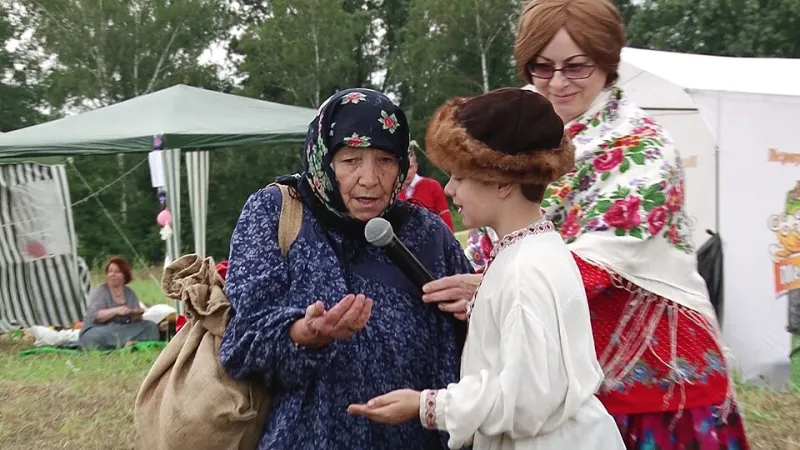
Photo: Max Kuznetsov (photographer), Inna Ismailova (producer), CC BY-SA 4.0, via Wikimedia Commons
Vowel Movements: The High-Stakes Business of Making Celebrities Sound Like They're From Everywhere and Nowhere
There is a sound that Hollywood has decided Middle America finds trustworthy. It lives somewhere in the flat vowels of the Great Lakes region, the unhurried cadence of the Pacific Northwest, and the aggressively non-threatening consonants of absolutely nowhere in particular. It is the sound of a person who could theoretically be from Ohio. It is the sound of palatable.
 Photo: Pacific Northwest, via wallpaperaccess.com
And if you are a foreign-born celebrity whose natural accent does not produce this sound, there is an entire industry ready to install it in your mouth for a very reasonable monthly fee.
Welcome to the world of accent coaching as a branding service — where linguistics meets PR strategy, and the way you pronounce the word "water" is a calculated business decision with real commercial implications.
The New Dialect Consultant
Accent coaches have always existed in Hollywood. For decades, their job was straightforward: help an actor convincingly portray a character whose speech patterns differ from their own. A London-born actor playing a Chicago cop. A Texas native voicing a New York detective. Clean, contained, project-specific work.
That job description has quietly and dramatically expanded.
"I'm not just a coach anymore," says Diana, a Los Angeles-based dialect consultant who has worked with clients from four continents and asked us not to publish her last name because her NDAs, she says, "could paper a small house." "I'm a branding consultant who works through phonetics. My clients aren't just learning accents for roles. They're managing how they're perceived in every interview, every red carpet, every podcast appearance. The accent is part of the product."
The product, in this case, is a human being. But in Hollywood, that distinction has always been a bit blurry.
The American Palatability Index
Here's the uncomfortable truth that nobody in the industry particularly enjoys saying out loud: certain accents sell better than others in the American market, and those rankings shift depending on context, genre, and the current political temperature.
A crisp British Received Pronunciation accent is, in many contexts, an asset — it reads as intelligent, sophisticated, and slightly exotic in a way that American audiences historically find appealing rather than alienating. This is why British actors have dominated prestige drama for decades and why approximately half of all Marvel villains sound like they attended Eton.
But that same accent, deployed incorrectly, can create distance. In a romantic comedy aimed at a broad domestic audience, in a country music crossover campaign, in a talk show appearance where the goal is relatability rather than aspiration, the BBC vowels can become a liability.
"There are markets where sounding too foreign costs you," says a talent agent who represents international clients and spoke to PopWire Today on background. "Not everywhere, not always, but enough that it becomes a conversation. We ask: who is this person trying to reach, and what does that audience need to hear?"
The answer to that question determines how much of a client's natural accent survives the branding process.
Dialing It Up, Dialing It Down
What makes modern accent coaching genuinely fascinating — and, depending on your feelings about authenticity, either impressive or deeply weird — is that it's rarely about replacing an accent entirely. The sophisticated approach is about calibration.
A client might maintain a softened version of their natural accent for general media appearances — enough to signal cultural identity and the authenticity that comes with it, but smoothed down sufficiently to avoid triggering whatever regional biases might exist in a target demographic. For specific projects, the dial gets adjusted further in either direction.
"I had a client who was doing a film that required full American," Diana tells us. "And then they were promoting a fragrance in Europe where their European identity was literally the selling point. Same person, same month, two completely different phonetic presentations. We rehearsed the transitions. It became muscle memory."
The transitions, she notes, are the hardest part. Slipping accidentally into the wrong accent at the wrong moment — during a live interview, in an unscripted exchange — is considered a minor PR incident. Not a crisis, but a note. Something to be addressed before the next appearance.
The Controversy Cycle Adjustment
Perhaps the most remarkable application of accent coaching as a PR tool is what industry insiders have started calling the "controversy dial" — the practice of strategically adjusting a celebrity's accent presentation in response to a public relations crisis.
The logic, explained with admirable frankness by one publicist who shall remain nameless, goes something like this: when a foreign-born celebrity is embroiled in a controversy that has taken on a nationalistic dimension — accusations of taking American jobs, cultural appropriation debates, backlash from audiences who feel the celebrity is insufficiently "authentic" — leaning into the natural accent can actually defuse tension.
"It reminds people that this person is from somewhere else," the publicist explains. "It reframes the story. Instead of 'this person is pretending to be something they're not,' it becomes 'this person is an outsider navigating our culture.' The sympathy dynamics shift."
Conversely, doubling down on the American-adjacent presentation during periods of positive press reinforces the celebrity's status as a fully assimilated cultural participant — someone who belongs, who fits, who is one of us.
The accent, in other words, is a rhetorical device. It argues on behalf of its wearer.
The Ethics of the Dial
Spend enough time in this particular corner of the entertainment industry and you'll start to notice that almost nobody wants to talk about whether any of this is okay.
On one hand, code-switching — the practice of adjusting speech patterns depending on social context — is something millions of Americans do naturally and often out of necessity, particularly people of color navigating predominantly white professional spaces. Framing accent coaching as categorically artificial ignores the reality that accent is always, to some degree, a performance.
On the other hand, there's something worth examining in an industry that charges premium rates to systematically sand down the linguistic identities of foreign-born entertainers in order to make them more palatable to an audience that has never been asked to examine its own preferences.
"I think about it," Diana admits, when we push her on the ethics. "I think about it a lot. My job is to give clients options. Whether they choose to use those options, and when, and why — that's their call. I'm just expanding the toolkit."
It's a reasonable answer. It's also, notably, delivered in an accent that is virtually impossible to place geographically.
We didn't ask. Some things in Hollywood are better left unexamined.
Like where, exactly, you learned to say 'water' like that.