The Zombie Fanbase: Inside the Shady Business of Buying Your Way Back to Relevance
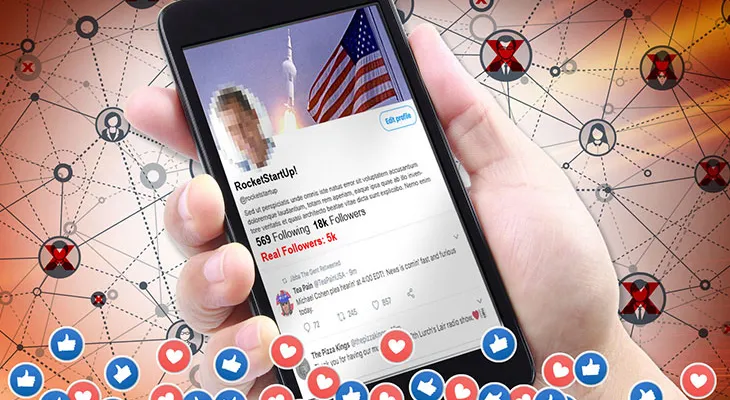
Photo: person on phone social media fake followers analytics screen, via damore-mckim.northeastern.edu
Somewhere in the continental United States, a celebrity whose last relevant moment occurred during the Obama administration is experiencing what their team is describing as "a major cultural resurgence." Their most recent Instagram post has 47,000 comments. Their TikTok repost has 2.3 million views. A fan account with 800,000 followers just declared them "criminally underrated" and the post went, inexplicably, viral.
 Photo: Obama administration, via images.ctfassets.net
You don't remember asking for this. You didn't ask for this. Almost nobody asked for this.
But somebody paid for it.
Welcome to the engagement farm — the booming, barely-regulated, aggressively underreported industry keeping dead careers on life support through the careful, systematic manufacturing of fake human enthusiasm.
The Anatomy of a Fake Comeback
Let's set the scene. A mid-tier celebrity — let's call them a former reality competition finalist, a one-hit-wonder from 2011, or a Disney Channel alum whose transition to a "mature artistic direction" did not land — decides they are ready to return to public consciousness. Their manager agrees. Their bank account agrees more urgently.
The problem is that organic interest simply isn't there. Real fans have moved on. The algorithm has forgotten them. A comeback requires momentum, and momentum requires the appearance of an existing audience — because in the attention economy, nothing attracts a crowd like an existing crowd.
This is where the engagement farms come in.
"Think of it like priming a pump," explains Marcus, who runs what he describes as a "social media optimization consultancy" out of Atlanta and agreed to speak to PopWire Today on condition that we not use his last name or, quote, "any details that would make me Googleable." "You need enough activity on an account to make the algorithm think something is happening. Once the algorithm thinks something is happening, it shows the content to real people. Then real people engage. Then it actually is happening."
It's a fake-it-till-you-make-it strategy with a monthly retainer and a performance dashboard.
Who's Running the Accounts?
The actual mechanics of engagement farming vary wildly depending on budget and ambition. At the lower end, you've got simple bot networks — automated accounts that like, follow, and post generic comments ("omg yes queen 🔥🔥🔥") at scale. These are cheap, detectable, and increasingly ineffective as platforms improve their bot-identification systems.
The premium product is something else entirely.
Higher-end operations use real human contractors — often gig workers operating from the US, Eastern Europe, and Southeast Asia — who are paid to behave like genuine fans. They maintain fully developed fake personas, complete with profile photos (frequently AI-generated faces), post histories, follower bases, and consistent aesthetic identities. They don't just drop a fire emoji and vanish. They argue in comment sections. They create fan edits. They post "unprompted" appreciation threads that feel authentic because a real human being, however financially motivated, actually wrote them.
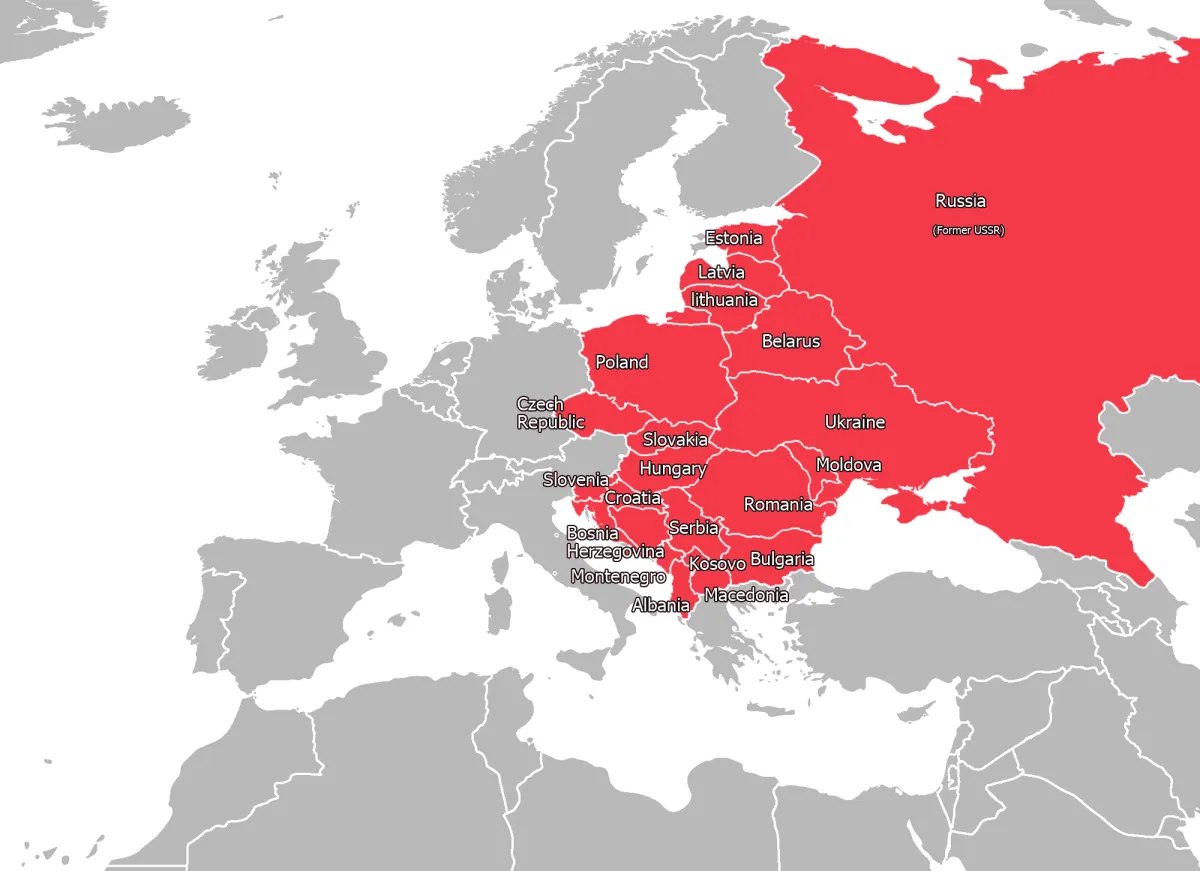 Photo: Eastern Europe, via mapofeurope.com
"The goal is to pass the vibe check," says Marcus. "Real fans can smell a bot. They can't always smell a person who's being paid to act like a fan. That's a much harder call."
The Managers Cutting the Checks
On the client side, the conversation is rarely framed in terms of fakery. Industry sources describe the service as "audience development," "engagement acceleration," or — our personal favorite — "community seeding."
"Nobody says 'I want to buy fake fans,'" says a talent manager who represents several mid-level entertainers and spoke to us under strict anonymity. "They say, 'I need to build momentum around this project.' The vendor handles the specifics. The manager maintains plausible deniability. It's very clean."
Pricing, according to multiple sources, varies enormously. A basic engagement package — enough to make a post look active and trick the algorithm into wider distribution — can run anywhere from a few hundred dollars to several thousand per month. Full-service campaigns, which include coordinated trending pushes, manufactured fan account ecosystems, and crisis-response comment flooding (burying negative feedback under waves of positive noise), can run into the tens of thousands monthly.
For a celebrity whose brand valuation depends on perceived cultural relevance, that's not an expense. That's an investment.
The Platforms Are Not Exactly Rushing to Fix This
Here's the part of the story where we would love to tell you that the major social media platforms are aggressively cracking down on engagement farming and protecting the integrity of their ecosystems.
We cannot tell you that.
What we can tell you is that engagement farming directly benefits platforms in the short term by inflating activity metrics, increasing time spent on the app, and generating the kind of manufactured discourse that keeps real users engaged and scrolling. A fake fan war in the comments of a fading celebrity's comeback post is still a comment section that keeps real people reading.
"The platforms know," says one digital marketing analyst who consults for both brands and entertainment clients. "They have the data. They can see the patterns. The enforcement is selective at best. The business incentives don't really point toward aggressive cleanup."
Platforms will, when pressed, issue statements about their commitment to authentic engagement and their ongoing efforts to remove inauthentic behavior. These statements are, to use the technical term, vibes.
The Real Cost of the Zombie Fanbase
Beyond the obvious ethical squickiness — and there is a lot of ethical squickiness here — the engagement farm model creates a genuinely strange feedback loop in the celebrity ecosystem.
Artists and entertainers who might otherwise gracefully transition out of the spotlight instead receive artificial signals that their audience is hungry for more. Labels and studios, looking at inflated engagement numbers, greenlight projects that real audiences have no interest in. Genuine emerging talent gets pushed aside in algorithmic queues by manufactured noise from careers that should have ended naturally.
And the celebrities at the center of it? Some of them know exactly what's happening. Others are being told by their teams that the comeback is real, the momentum is organic, and the people really do want more.
That second scenario is, if anything, sadder than the first.
"I've had clients who genuinely believed their resurgence was happening," says our anonymous manager. "They'd look at the numbers and get excited. Plan tours. Pitch new projects. And then the campaign would end and the numbers would drop and they'd be confused and kind of devastated."
The pump, as it turns out, doesn't stay primed forever. Eventually the engagement farm moves on to the next client, the algorithm loses interest, and the zombie fanbase shuffles back into the digital void from which it came.
Until the next retainer check clears.